February 24, 2026 Leon Hitchens
Why Your Google Ads Budget Might Not Be Enough for Your Goals
In the high-stakes arena of digital marketing, Google Ads remains one of the most powerful levers for driving immediate traffic and revenue. However, a common frustration among business owners is the “performance plateau”: the moment when clicks stop converting or when the cost per acquisition (CPA) skyrockets. More often than not, the culprit isn’t the creative or the targeting; it is a fundamental misalignment between the budget and the business goals.
At Ruskin Consulting, we frequently see ambitious goals backed by conservative budgets. While being fiscally responsible is a virtue, underfunding a Google Ads campaign can lead to greater capital waste than overspending. Understanding the mechanics of the ad auction and the “Learning Phase” is the first step in determining if your current investment is enough to move the needle.
The Economics of the Google Ads Auction

To understand why your budget might be failing you, it is vital to recognize that Google Ads is a real-time auction system. You aren’t just paying for space; you are outbidding competitors for the attention of a specific user at a specific moment.
If your daily budget is too low relative to the Cost-Per-Click (CPC) in your industry, your ads will only show for a fraction of the day. This results in “Limited by Budget” warnings, which essentially mean your ads are being pulled off the shelf before your target audience has finished shopping. For industries with high high-intent keywords, such as legal services or enterprise software, a single click can cost upwards of $50. If your daily budget is $100, two clicks will exhaust your visibility for the entire day, providing a sample size far too small for the algorithm to optimize.
The “Learning Phase” and Data Requirements
Google’s modern advertising ecosystem relies heavily on machine learning. When you launch a campaign, the platform enters a Learning Phase, during which it gathers data on user behavior to determine which segments are most likely to convert.
Machine learning requires fuel, and that fuel is data. If your budget only allows for a handful of clicks per week, the algorithm will struggle to find patterns. A campaign that lacks sufficient conversion data stays in the learning phase indefinitely, leading to inconsistent performance and inefficient spending. To achieve true campaign maturity, you generally need a budget that supports at least 15 to 30 conversions per month. Without this volume, the “Smart Bidding” strategies that many businesses rely on simply cannot function effectively.
The Gap Between High-Intent Keywords and Market Reality
A primary reason budgets fail is the pursuit of high-intent “money” keywords without the requisite capital. Keywords like “best SEO agency” or “buy homeowners insurance” are hyper-competitive.
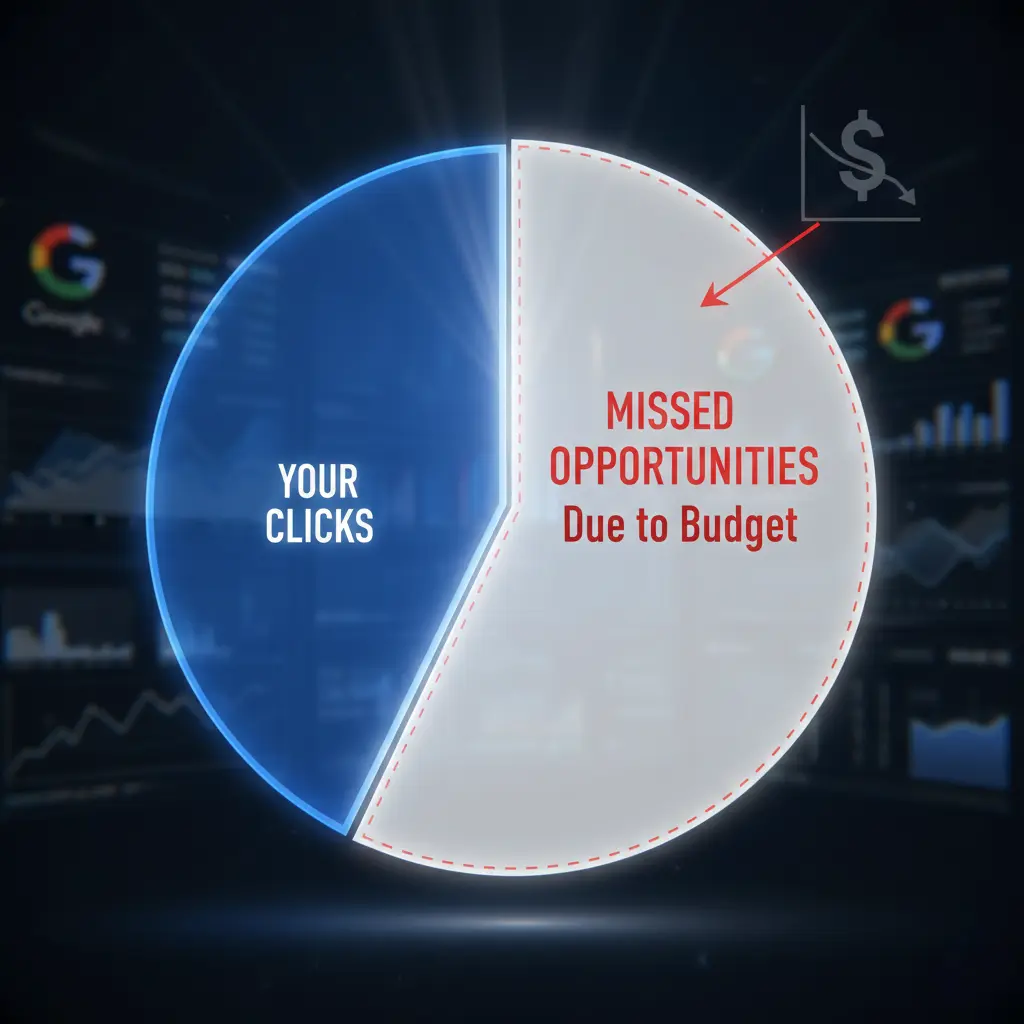
If you are competing in a space where the average competitor spends $5,000 a month and you spend $500, you aren’t just getting 10% of the results; you are likely getting 0% of the top-tier leads. This is because Google prioritizes ads that have a high Ad Rank, which is a combination of your bid and your Quality Score. A restricted budget often forces you into lower positions where click-through rates (CTR) drop significantly, further hurting your Quality Score and creating a downward spiral of inefficiency.
Hidden Factors: Seasonality and Competitor Aggression
Your budget doesn’t exist in a vacuum. External factors frequently shift the “entry price” of a successful campaign. During peak seasons, such as the holidays for e-commerce or tax season for accountants, CPCs can double or triple overnight. Furthermore, if a well-funded competitor enters your geographical market and sets an aggressive “Target ROAS” (Return on Ad Spend), they can effectively price you out of the auction. This is why a “set it and forget it” approach to budgeting is a recipe for failure. Strategic adjustments to market volatility are essential to maintaining a consistent presence. You can find excellent data on industry benchmarks and average CPCs via the U.S. Small Business Administration and professional marketing repositories like Search Engine Journal.
Quality Score: The Budget Multiplier
It is a common misconception that the biggest spender always wins. Google’s goal is to provide the most relevant experience to its users. This is where Quality Score comes into play. If your landing page is highly relevant and your ad copy is compelling, Google may grant you a higher position than a competitor who is bidding more but has a lower-quality experience.
Improving your Quality Score is the most effective way to “stretch” a limited budget. By increasing your relevance, you can lower your effective CPC, allowing your daily budget to cover more clicks. However, even the best Quality Score cannot compensate for a budget that is mathematically incapable of covering the cost of entry in a saturated market.
Assessing Your “Share of Voice”
One of the most telling metrics in your Google Ads dashboard is Impression Share Lost due to Budget. This percentage tells you exactly how many times your ad could have shown but didn’t because you ran out of money.
If you find that you are losing 70% of your potential impressions due to budget, you are leaving a massive amount of revenue on the table. In many cases, it is better to narrow your targeting, perhaps by focusing on a smaller geographic area or fewer keywords, than to spread a thin budget across a wide net. This ensures that where you do compete, you have a dominant Share of Voice.
Strategic Depth and Professional Oversight
Navigating the complexities of Google Ads requires more than just a credit card and a list of keywords. It requires strategic depth and professional oversight to ensure that every dollar is an investment, not an expense. Successful digital advertising is built on a foundation of deep technical proficiency and real-world experience. When you partner with experts who understand the nuances of bid management, conversion tracking, and competitive analysis, you gain a significant advantage over those attempting to manage the “black box” of Google Ads alone.
Optimize Your Digital Investment with Ruskin Consulting
Is your current marketing spend driving growth, or is it simply disappearing into the digital void? At Ruskin Consulting, we specialize in bridging the gap between your business objectives and the realities of the digital marketplace. Our team provides the analytical rigor and tactical precision necessary to audit your current campaigns, identify budget bottlenecks, and reallocate resources for maximum impact. We don’t just manage ads; we architect growth engines designed to outperform the competition. Reach out to Ruskin Consulting today for a comprehensive account audit, and let’s ensure your budget is finally big enough to achieve your vision.